
Basement waterproofing is one of those projects homeowners rarely think about until there is a problem, and by then the problem is usually visible: a damp corner after heavy rain, a musty smell that will not go away, or water across the slab after a storm.
Southeastern Pennsylvania is demanding on foundations. Many homes across Delaware County, Chester County, and the Main Line were built well before modern drainage standards, often on clay-heavy or sloped lots that push groundwater toward the foundation. This guide covers the warning signs worth acting on, what different solutions typically cost, and how to tell whether you need full waterproofing or targeted drainage correction.
Warning Signs Your Basement Needs Attention
Some signs are obvious. Others are easy to dismiss until they cause real damage:
- Efflorescence. White, chalky mineral deposits on walls mean water is moving through the masonry.
- Musty odor. A persistent smell usually indicates elevated humidity or hidden microbial growth, even when nothing looks wet.
- Water stains or a tide line. Horizontal discoloration low on the walls shows where water has stood before.
- Cracks. Fine vertical cracks are common; horizontal cracks or bowing walls indicate lateral soil pressure and need prompt evaluation.
- A sump pump that runs constantly. Frequent cycling in dry weather suggests a high water table or a drainage issue.
- Condensation, rust, or peeling paint. Sweating pipes, rusting appliance feet, and bubbling paint all point to excess moisture.
Where the Water Is Actually Coming From
Effective waterproofing starts with diagnosis, because the cheapest fix is often outside the house. Common sources include surface water from clogged gutters or downspouts discharging beside the foundation, negative grading that slopes toward the house, hydrostatic pressure pushing groundwater up through the slab or wall joints, and interior humidity from unvented dryers or uninsulated pipes.
A contractor who immediately recommends the most expensive system without investigating drainage is skipping the most important step. Sometimes extending downspouts and regrading solves the problem for a few hundred dollars.
Typical Cost Ranges
Costs vary with home size, foundation type, access, and severity, but these ranges are typical for our region:
- Gutter, downspout, and grading corrections: a few hundred to low thousands
- Crack injection repair: several hundred dollars per crack
- Sump pump installation or replacement: roughly $1,000 to $3,000 depending on pit work and battery backup
- Interior perimeter drain system: commonly $5,000 to $15,000+ depending on linear footage
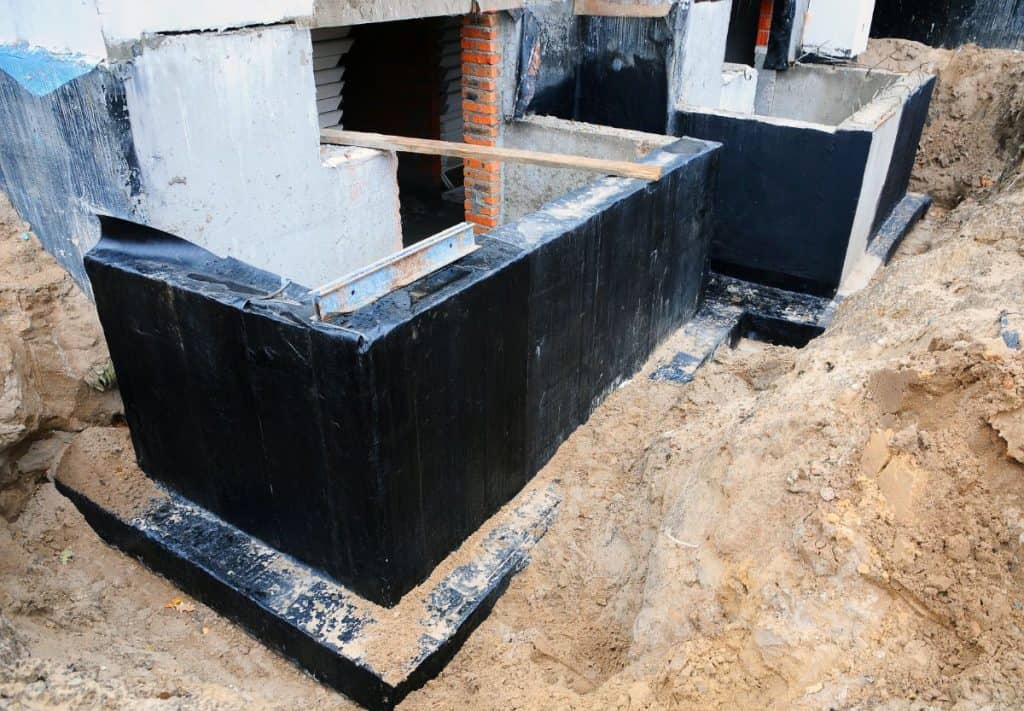
- Exterior excavation and membrane waterproofing: the most involved option, often $15,000+
- Structural repair for bowing walls: priced separately and requires engineering input
Treat these as planning ranges, not quotes. An on-site assessment is the only way to price accurately.
Why This Matters Before You Finish a Basement
No finish material survives a wet basement, which is why moisture comes first in our basement finishing guide. Framing, insulation, drywall, flooring, and trim installed over an unresolved moisture problem will fail, and the repair means removing work you already paid for.
This is why moisture is the first item on our checklist of things to consider before finishing your basement, and why we cover it in detail in why basement waterproofing matters before finishing. If you are budgeting a lower-level project, our basement finishing cost guide and project timeline breakdown will help you plan realistically.
Local Conditions Across Our Service Area
Older Main Line homes in Haverford, Bryn Mawr, and Villanova often have stone or block foundations with original drainage, where interior systems and grading corrections are usually the practical answer. Sloped properties around Chadds Ford, Glen Mills, and Garnet Valley collect runoff that must be routed away before it reaches the foundation. Newer construction in West Chester and Chester County typically has modern drainage, so problems there more often trace to downspouts, grading, or a failing sump pump.
We handle moisture evaluation as part of basement finishing in Glen Mills, Haverford, and Chadds Ford.
Concerned About Moisture in Your Basement?
The right first step is an honest assessment: what the water is doing, where it comes from, and the least invasive fix that will actually hold. E. Wallace Construction evaluates moisture conditions and plans lower-level projects throughout Delaware County, Chester County, the Main Line, and Wilmington, DE.
Request a free consultation and we will review your basement, identify the moisture source, and explain your options before you spend on finishes.